A Brief Email Exchange on the Origins of Music

SUNDAY, OCTOBER 12, 2014

In anticipation of our first meeting, on October 16, 2014 (which will focus on prehistory), Christopher kindly emailed to the group the following video clip — amazingly preserved from the Neolithic era!

*

This prompted Sasha to share with the group a book she had read that more seriously discusses the origins of music. She wrote:

….according to the book “The Great Animal Orchestra” by Bernie Kraus (Mills Music Grad),
human music originated from the sounds of animals.

So too language. Considering birds appeared well over 100 million years ago, and squirrels (they are chatty too), 50 million, seems like a likely theory. We were relatively silent in comparison to our nonhuman neighbors.

Ahh, how far we’ve come.

~Sasha P

I answered this with another email:

In David Abram’s book “Becoming Animal” he has an extended meditation on how closely tied we primates are — evolutionarily — to birdsong.

Think of how important it was to hear nearby birds fall silent when a predator approached. Or to know the differences between their courtship songs or call-and-response songs or warnings or distress.

It’s good to think of us feeling that, on some level, when we listen to, say, the harmonica break in “Love Me Do” — “Ahh, that’s a courtship song, ok to relax…”

So much happening to us all the time that comes from our relationship with nature.


An Email Exchange on the Question of Consciousness

SUNDAY, OCTOBER 12, 2014

A number of members have been sending emails back and forth on the question of whether there is something distinct about human “consciousness” (thus setting us apart from other animals).

neural networks

Ivan wrote to me, suggesting that the group might benefit from reading Thomas Nagel’s essay, “What Is It Like to Be a Bat?” (click here to read).  And he added this commentary:

The crux of Nagel’s argument is that for every conscious being there is something internal and subjective that it is like to be that being and that this something cannot be reduced to that physical object we refer to as the brain. I mention this because I noted the reference to consciousness in the materials you circulated.

Personally, I don’t find the question, “What is consciousness?” difficult to understand — it’s the totality and flood of feelings, thoughts, sensations and perceptions we all experience throughout our lives. The difficult and interesting question from my perspective is: how can there be consciousness in the physical world of particles and forces described by modern science; or, how can the slab of meat inside our skulls possibly account for conscious life — after all, they are categorically different. One way to put this is that there is a seemingly unbridgeable “explanatory gap” between the brain in our skull and our conscious life…

*

Dean then happened to send to the group a link to an opinion piece in the New York Times (click here to read) by Michael S. A. Graziano, covering some of the same territory.

*

To which I responded by sharing my response to Ivan’s earlier email:

Why are we talking about consciousness? Why is this coming up for us in advance of the meeting? 

This question may not seem, at first glance, directly related to the topic this month, which is devoted to exploring prehistorical understandings of what it is to be human…

And yet it comes up quickly when we consider their (and our) relationships with other animals. Certainly it is central to why humans have claimed a unique status, as the only animal capable of self-awareness, “free will,” a “soul,” a “moral sense” — all resting on “consciousness.” For these are the buzz words that have traditionally set us apart — in the Great Chain of Being model favored by religions.

These words have warm associations for us all of… specialness, awareness, attentiveness, etc. But they are also linked to our sense of difference and alienation from nature, I would suggest.

103234-100690

Is this guy, in some important way, not self-aware?

As for the article, I am more with Churchland et al. over Nagel and Searle, in the sense that I agree that our “mental states” — desires, feelings, “logic,” even the sense of self-awareness itself, are probably merely folk descriptions of neuronal-electrical activity in our physical brains.

Now of course they still matter deeply to us — we desire, we feel, we are aware of ourselves! — but that doesn’t mean that they need mystify us and stump us with an “explanatory gap.” The experience of being a bumblebee is (we may imagine) a series of urges to fly straight to pollen sources, to return to the hive, to jitter in a way to convey information to other bumblebees. The experience of a human is a series of urges to make human-like noises, causing reactions in other humans, to eat, to walk, to have sexual intercourse, etc.. We can call it our vaunted “consciousness” but as far as I can see it really is no more than the record we keep of these urges. I am unimpressed by consciousness.

And it’s not only philosophers who dwell on this word too much, in my view. People who practice meditation, are similarly hung-up on consciousness. They often claim to want to escape thoughts and experience “pure consciousness”. But I am suspicious that such a state is merely another record of neuronal activity, this time oriented towards an intuitive unity of physical inputs and other brain activity (perhaps lessoning the left hemisphere’s role and listening to the right hemisphere). It is no more transcendent or “pure” than anything else (though it certainly feels good and may be a worthy goal to pursue for promoting happy and peaceful behavior).

I do think, like Churchland, that the whole language around this is a residue of supernaturalism and religion, artifacts of our history.

But I am open to the possibility that I just don’t see it. In which case my resistance to the mystery about “consciousness” is interesting in itself. What threat would it pose to me if I were to acknowledge a problem here with my materialist/naturalist view?

*

Ivan then wrote back again:

Thanks for your thoughts and, yes, I think on this one we are going to have to agree to disagree!  I’m admittedly hung up on consciousness – my feelings, thoughts, sensations, my internal experience of color and awareness of the information I process, my very sense of self – all seem to me to possess a distinctive qualitative reality and to constitiute the most important (real) feature of my existence…

Also, the “explanatory gap” strikes me as philosophically self-evident: conceptually, I don’t see an explanatory bridge from brain to consciousness any more than I do from brick to consciousness. One strategy, of course, is to invoke the concept of a “brute fact” – i.e., it is just a fact of nature that when certain stuff (organic chemicals, etc.) combine in a certain way, you get consciousness. But brute facts are not only philosophically unsatisfying, they also seem to me an admission if ignorance. Another strategy (Nagel’s most recent one) is the suggestion that our current picture of the physical world is incomplete and it is this incompleteness that bars (conceptually speaking) the reduction of mind to brain. That certainly seems to me a real possibility (but certainly NOT any kind of argument for the existence of God in any remotely religious sense).

At the end of the day, my sense is that there are aspects of the world that may forever remain mysteries (brute facts, I suppose) to our species. I think consciousness may be one of them, but perhaps even gravity falls into this category (attraction from a distance – really? How does that work? It just does, and so we have an incredibly powerful explanatory model that allows us to make successful predictions). In this somewhat broader context, I highly recommend Chomsky’s article, “Mysteries of Nature” (click here to read)  published in the Journal of Philosophy and available online.

And yes – this is certainly interesting stuff to ponder …

*

To which I responded again:

Hey Ivan,

Thanks for writing back again on this with more clarification of your thoughts.

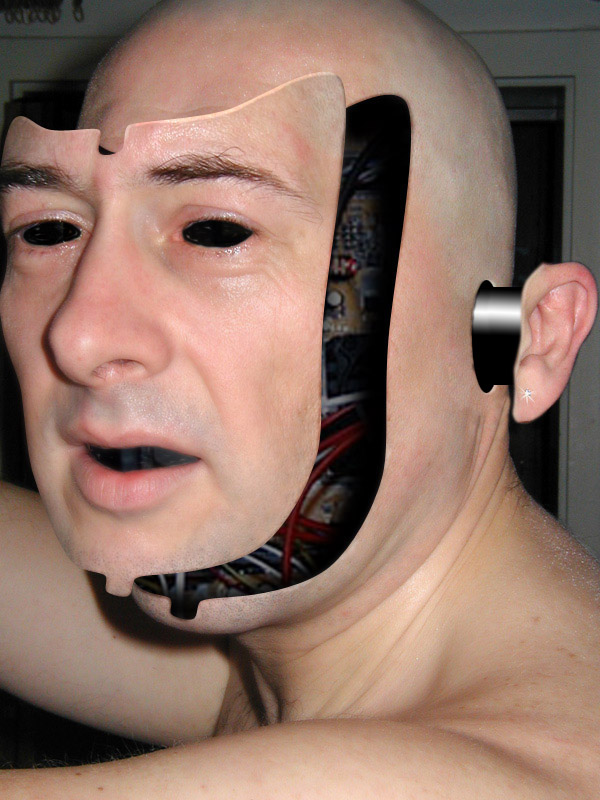
I understand that you have the feel of a distinctive quality to your self-awareness or “consciousness”. (So do I, you will be reassured to hear. Have no fear of those frequent scenes in sci-fi movies where the trusted companion is revealed to be a cyborg, with circuits and wires under his skin instead of the stuff you expect.)

OLYMPUS DIGITAL CAMERA

But I still don’t understand the threshold difference between our responses to this feeling. Why should this distinctive feeling of consciousness call out, to you, for some additional “whole is more than the sum of its parts” explanation? To me it is unclear, even, what you are looking for… Something more than your brain and its activity?

By the way, what do you think of the analogy a neuroscientist used when interviewed (click here to read)… He said that, to him, wanting to separate “consciousness” from the physical parts of your brain is akin to wanting to separate “motion” from the parts of your car. You’re never going to find a separate thing: motion is just what your car DOES when you have those physical parts working together. In the same way, isn’t it an answer to say that consciousness is just what your brain does when you have all these neural networks working together, sending electrical/chemical signals around in response to internal and external stimuli?

I do agree that there are many things that we are never going to understand, due to the limitations of our particular mental make-up (adapted for survival as medium-sized, predatory mammals living in grasslands). I wish we could see like hawks, think like dolphins… Being human, we are astonishingly good at social interaction, and we have had surprising success in understanding the mechanics of the physical world around us (gravity being an exception, as you point out). Still, we are unavoidably limited by our finite capacities. So yes, that could be one way to explain why we can’t understand and define consciousness… 

But another is just to say that there is, simply, no additional, supra-material thing to grasp. Yes, there is the subjective experience of each brain (actually, each hemisphere of the brain separately, as experiments show!). But we already have methods of conveying that. Art describes that subjective experience quite well — hence the shiver you get when you encounter it. The experience of listening to music can even capture subjectivity without words. Aren’t these enough? Why do you seek an observer-independent explanation? (Well I agree it would certainly be interesting, if possible — but I suspect there would be little to say except that which we already know, namely that “consciousness” is a feeling, the feeling of being present.)

I suspect that this difference between our outlooks (as esoteric as it is; some in the group, I am sure, will feel our difference is a case of intellectually splitting hairs), will keep coming back to interest us as we try to grope our way towards a non-supernatural approach to meaning.

*

To which Ivan responded one last time (in CAPITALs — though, mind you, he was not shouting, only differentiating between my email and his response):

On the question I posed on why he wanted some “additional” explanation, other than a biological one (what he refers to as a “brute fact”)…

I’M NOT LOOKING FOR AN “ADDITIONAL” EXPLANATION – JUST AN EXPLANATION. THE INTERNAL WORLD OF CONSCIOUSNESS, WITH ITS DISTINCTIVE QUALITATIVE FEEL, IS AS MUCH A PART OF THE NATURAL ORDER AS THE PLANT ON MY DESK; HENCE, IT TOO CRIES OUT FOR EXPLANATION. THE ELECTRICAL AND CHEMICAL ACTIVITY THAT TAKES PLACE IN MY NERVOUS SYSTEM SEEMS TO BELONG TO AN ENTIRELY DIFFERENT REALM. IT IS CLEARLY RELATED TO CONSCIOUSNESS, BUT EXACTLY HOW THE TWO WORLDS INTERLOCK IS WHAT WE DON’T REALLY UNDERSTAND AND THE PROBLEM IS THAT SIMPLY PILING UP MORE KNOWLEDGE RE THE TYPE OF PHYSICAL ACTIVITIES THAT TAKE PLACE IN THE BRAIN, AND LEARNING ABOUT ADDITIONAL “CORRELATIONS” BETWEEN BRAIN AND MIND, WON’T CHANGE THAT ONE BIT. YOUR LAST SENTENCE REMINDS ME OF A FAMOUS ARTICLE IN THIS AREA: “WHAT MARY DIDN’T KNOW” (click to read). MARY IS A COLORBLIND SCIENTIST WHO KNOWS EVERYTHING THERE IS TO KNOW ABOUT THE BRAIN. ONE DAY HER COLORBLINDNESS IS CURED AND SHE EXPERIENCES THE COLOR RED FOR THE FIRST TIME. DID SHE LEARN SOMETHING NEW? OF COURSE. DOES THIS SUPPORT THE POSITION THAT BRAIN AND MIND ARE NOT IDENTICAL – I THINK SO.

(But do we need something additional to explain, for example, the feeling of anger? Or the taste of a mango? They are “part of the natural order” as well, aren’t they? Why is “consciousness” different for you — that is, why does it require a deeper explanation than other mental states? — Tom)

Then Ivan responded to the analogy that consciousness arises from the physical parts of a brain… like motion arises from the physical components of a car.

I DON’T FIND THIS LINE OF REASONING CONVINCING AT ALL. I DON’T FIND IT HAS ANY REAL EXPLANATORY POWER. IS THE ARGUMENT NOW THAT CONSCIOUSNESS IS BRAIN ACTIVITY OR THAT IT RESULTS FROM BRAIN ACTIVITY (VERY DIFFERENT POSITIONS)?? ALSO, MY EXPERIENCE IS THAT NEUROSCIENTISTS HAVE A HARD TIME UNDERSTANDING THE PHILOSOPHICAL ISSUE AND A TENDENCY TO DIMINISH THE SIGNIFICANCE OF QUESTIONS AND PHENOMENA THAT DON’T FIT EASILY WITHIN THEIR CURRENT EXPLANATORY MODEL. IN ANY CASE, YOU DON’T NEED TO GO TO THE NEUROLOGIST. SEARLE TRIED ARGUING THAT CONSCIOUSNESS STANDS IN THE SAME RELATION TO THE BRAIN AS DIGESTION TO THE STOMACH. BUT AGAIN, I’M NOT CONVINCED AT ALL. THE STOMACH DIGESTS FOOD BY CRUSHING IT UP AND SECRETING CHEMICALS THAT BREAK IT DOWN (OR SOMETHING LIKE THAT …) – ALL OF WHICH IS CONCEPTUALLY CLEAR AND SO PHILOSOPHICALLY UNPROBLEMATIC. THE STRUCTURE AND ACTIVITY OF THE STOMACH “SLOTS” EASILY INTO THE PHENOMENON OF DIGESTION. I DON’T SEE THAT THE SAME HOLDS FOR THE STRUCTURE AND ACTIVITYOF THE BRAIN AND THE PHENOMENON OF CONSCIOUSNESS.

THERE DOES SEEM TO BE SOMETHING ADDITIONAL TO GRASP – ADDITIONAL TO THE WORLD OF PARTICLES AND FORCES AS CURRENTLY DESCRIBED BY PHYSICISTS: THE WORLD OF CONSCIOUSNESS. THIS WORLD WILL ALWAYS HAVE A PRIVATE, SUBJECTIVE CHARACTER, BUT DOESN’T ANY GENUINE EXPLANATION OF HOW WE HAVE CONSCIOUSNESS NEED TO BE PUBLIC AND OBJECTIVE (AND SO OBSERVER-INDEPENDENT)?

(I don’t think it does. That is a theological habit, I think, which is still ingrained in all of us: looking for a universal basis for things (Plato’s ideas, for example, or the major monotheistic religions’ versions of an unfathomable God). In the same way we still have the habit of looking for universally applicable or “categorical” moral or aesthetic rules — when our own private and subjective (and often ad hoc) ones do quite well, in most cases. — Tom)

I JUST WANT A CONCEPTUALLY CLEAR EXPLANATION OF HOW CONSCIOUSNESS CAN EXIST IN THE WORLD AS CURRENTLY DESCRIBED BY PHYSICS. IT MAY BE THAT CONSCIOUSNESS IS BEST SEEN AS A KIND OF COUNTER-EXAMPLE THAT SHOWS THE PHYSICIST’S CURRENT PICTURE IS LACKING SOMETHING. THAT IS NAGEL’S VIEW. WHY SHOULDN’T THIS BE THE CASE?

*

With that, Ivan and I agreed that we were getting perilously close to reaching the limits of what we could accomplish with an email exchange — and we would have to carry our concerns into a person-to-person conversation sometime!

Thinking About Humans and Animals

THURSDAY, OCTOBER 16, 2014

by Heather Clague

It is interesting that the question of consciousness comes up when thinking about human exceptionalism, but I agree with you that there is ample evidence that many animals have forms of consciousness that we can easily recognize as sentient experience worthy of our empathic inquiry and moral consideration.  We cannot rest arguments that humans are unique on the presence of conscious experience.  Also, even if we do have mental capacities not shared by other animals, as you have pointed out, every species is ‘special’ in it’s own way, and it would be a mistake to valorize our particular peacock tails over the miraculous adaptations of each species to its particular set of selection pressures.

But if I am ready to say that we aren’t aesthetically or morally special, there is no denying our exceptionality in terms of evolutionary success.   We have the largest biomass of any single terrestrial species, and if we include the biomass of domesticated animals, humans and the animals under our dominion have the greatest biomass of any species on Earth. Is it not reasonable to wonder at what about ourselves has allowed this to happen?  Our cognitive and social-emotional capacities may not seem that much different than those of chimps, but whatever that difference is has been enough to allow us to swarm and drive them nearly to extinction.

I believe the capacity that has allowed us to separate ourselves from other creatures is our particular capacity to cooperate.  This ability emerges from an interrelated set of faculties that extend beyond mere consciousness, and include language, sophisticated empathy and motivation for intersubjective sharing, moral sense and cultural transmission.  We can find animal examples of these individual skills, but none come close to the degree manifest by humans.  At some point, a large enough quantitative difference becomes a qualitative difference.  Had humans not stumbled into settled agriculture and the industrial revolution and taken over the world, I do not believe that chimps would have done so.  Planet of the Apes was never a possibility.  It is ironic, then, that the capacity that has allowed us to achieve near complete domination is based on our ability to feel that this domination may be wrong.

Is this group then not an opportunity to articulate a sophisticated morality that appreciates our mental capacities and acknowledges our modern social and environmental perils?  We are living at densities our brains and bodies did not evolve to handle, and we are most certainly altering the globe through climate change and mass extinction.  We evolved an ability to feel concern for others to serve our reproductive self interest; I take the view that effective ethical behavior is a form of enlightened self interest. Should we extend our moral concern to non-human creatures and the environment?  To people we don’t know living places we will never visit?  I’m afraid we have to; it’s become a small world, and as this horrific ebola outbreak is showing us, what goes around comes around.

Notes on the First Meeting — PREHISTORY

SUNDAY OCTOBER 18, 2014

The first meeting! It begins.

When we had all taken our seats in the living room, shortly after 8:30 pm,  I started us off by sharing my thinking behind the name of our group.

1. Why “the Old New Way”?

We are doing something new tonight, I said.

But we are also doing something very, very old. We are asking the same questions that have been asked by, well… by  pretty much everyone, all through human history.

Who am I?

Why am I here?

How should I act? 

What happens after I die?

And as we will see (in our readings going forward), even taking a strictly non-supernatural approach to these questions is not new.

Hence the “old” part.

But then, you might ask: how are we are doing anything new at all?

For one, this is new because… we are doing it here and now, in October of 2014. The mere fact of our timing, in this place, at this moment, makes it new.

For another, this is new because… we have no idea where these meetings will lead us and how we will grow from them.

More than these points, however… there is another important way that I think what we are doing is new:

We will have to fashion a new language even to talk about it.

2. Why Will We Need a New Language? 

I elaborated a little more on this point:

The languages and associations we all bring with us to this first meeting, I suggested, are steeped in old dichotomies, old categories, old habits. No fault of our own; that’s just how it goes.

For example, unless we deliberately resist it…

  • we tend to think that rationality operates independently from emotion;
  • we tend to think of capital “M” Meaning as being “out there,” separate from an individual’s assessment of it. (We are in the habit of craving “objectivity” in all aspects of our lives);
  • we think of there being at least the possibility of reconciling all of our values and aspirations in a unified way, if only we could… just get it right;
  • many of us seek unseen realities, which are sometimes characterized as “transcendent” realms;
  • we think of “the animal part” of each of us (in so far as we acknowledge it at all) as a wild, impulsive nature, which must be directed into the proper channels (by what? The “non-animal part” of us?).

Much of this is a product of millennia upon millennia of religious, or so-called “spiritual” thinking.

This type of talk has infiltrated American’s politics especially, since our “rights”-based revolution drew from French Enlightenment thinkers, worshipers at the altar of Reason, as well as Platonic/Judeo-Christian traditions of thought.

It is the air we breathe.

We will attempting to refashion language in this group. Sounds ambitious, doesn’t it? And it is! I want us to actively contest these usual categories…

  • changing our orientation of ourselves so that we do not forget our status as evolutionary beings, animals formed by cross-currents of adaptation, not perfectible or pure in any sense but rife with contradictions all the way down;
  • reminding us that we are animals in everything we do (yes, even when listening to Mozart while doing higher math– all the way down);
  • looking with fresh eyes at our contemporary notions of “love,” “death,” “work,” “good,” “evil,” “real,” and so on; and
  • making sure to pay attention to our wordless, emotional, strangest responses, as much as we pay attention to what can be more easily articulated and affirmed by others.

I think we should embrace the confusion that this will cause us.

Confusion will be our friend in this process, since it will signal when we are getting somewhere.

3. Some Very General Guidelines for Our Group as We Begin

At this point, since this was our first meeting, I shared with the group some very general guidelines that I thought would be worth mentioning.

First, I said, I want to encourage complete freedom of expression in this group (and all the time! Why not?).

I don’t want there to be any confusion on this point… What I mean is that ANYBODY is encouraged to say ANYTHING and EVERYTHING at ANYTIME.

(As those of you who know me have already witnessed, I sometimes try to pursue a thought by saying provocative things, or extending the logic behind an argument to its limit… And I want you all to feel free to do that too!)

We all know, of course, that words can never adequately express much of what we will be exploring in this group. But – hey, we have words, and we should not be afraid of them just because they are inadequate.

Second, this group will be focused on finding non-supernatural ways of looking at the world and our identities in it.

This means some approaches, although they surely can be expressed, may not be where we stay.

Other groups (“places of worship,” as they are called, certain spiritual retreats, and so on) often use the language of “faith” and “transcendence” and “God is love” and the like. That probably won’t be the case here — where we will be more inclined to leave God out of it entirely and just go with the love.

I am interested in keeping our focus on thoroughly natural concerns and experiences. This life. This world.

It is my hope that these parameters will give our group its unique interest — and its value.

Third, it’s okay for us not to agree.

I want to say from the beginning that I expect everyone here to have a very idiosyncratic experience with this group.

For some this group may inspire you, for others it may frustrate you. Some of us will perhaps be changed by it, perhaps for the better; others of us may feel blocked, or made anxious, or even angry at times.

That’s fine.

It would be wonderful if we all arrived together at a rich synthesis of emotional awareness and philosophical understanding by the end of our meetings. But then again, it would be disturbing too if that happened  – wouldn’t it?

And anyway, I asked the group, don’t you find that, with surprising frequency, the very things you were most certain of ten years ago are the things that you feel completely different about today?

Let’s cherish our disagreements.

4. A Breathing Exercise to Begin

To start us off, I asked those present if I could lead us in a very brief… breathing exercise, before we plunged into our discussions. (I explained that I have found from experience that I think more clearly — and more intuitively — when I do this.)

So with only a slight feeling of awkwardness, and lots of good will, we closed our eyes and steadied ourselves for a moment before beginning.

5. The Question of “Attentiveness”

Not wanting to take any more time, I started us off at this point with a simple query for the group…

When we think of prehistoric people, I said, we imagine that they were extremely attentive to their surrounding — a leaf rustling, a change in the weather, a crooked branch that might be used as a tool.

But in thinking of them in this way over the last weeks it struck me… that we don’t want to over-romanticize them.

So my question was: Are we just as attentive now as prehistoric people were — only to different things?

Marie-José answered quickly and decisively, as those of us who know her would expect.

“Yes we are equally attentive!” she said. “But the stakes are much lower for us. We pay attention to which loaf of bread we want to buy at the bakery, or how to access an email on our iPhone while talking, or what music we want playing in the background as we drive. But for prehistoric people, a wrong decision about the weather, or what to listen to, could cost their lives. That is the difference!”

Lucie argued that we may be attentive, as Marie-José suggests, but in a far more superficial way. We don’t take the time to experience the fullness of what we are doing. Richard agreed that the distractions and busyness of our lives are such that we tend to glance from thing to thing. And it is getting worse, he suggested, in the digital age. “We are constantly being entertained,” he remarked.

Renée spoke of her recent experience of watching two men walk together down the sidewalk in San Francisco, both listening to music through bulky headphones. She couldn’t but help think how sadly unaware they seemed of their surroundings — and each other.

Sylvaine commented that she thought an important difference is that prehistoric people had more space.

Setenay questioned the vagueness of the term “attentive.” She wondered if we may be as attentive as prehistoric people, but not as “focused.”

Dean raised a contrary view to the one expressed so far.

He explained that he guessed we actually ARE as attentive, since our cognitive abilities are probably quite similar to prehistoric human beings. After all, the stakes for us when driving are certainly high. The stakes of which medication to take for a disease can be as high too. And many of the social and career choices we make have very serious consequences for us.

For Dean, then, we are simply in a different context, and we have adjusted accordingly.

6. Seeing the Whole Animal

I spoke up at this point to say that, although I agree generally with Dean that we are probably similarly attentive to our surroundings — though very different in what we choose to focus on — there is one aspect of our attention that seems to me markedly different.

Namely, we usually view animals as separate from us, inferior to us, almost as objects “That damn raccoon got into the garbage again last night!” I may mutter, never thinking of the raccoon as anything but a nuisance.

Whereas, as the reading brought out, prehistoric people likely saw animals as equally whole and present beings. We might speculate that a prehistoric man would have said something like… “Oh! That raccoon with the slight bend in her tail, you know the one we saw two full moons ago, she was hungry and found our meat scraps to feed her children. I wonder if she is ill?” (Not to say my prehistoric counterpart wouldn’t then throw a rock; I’m not imputing more generosity in this case, just more awareness.)

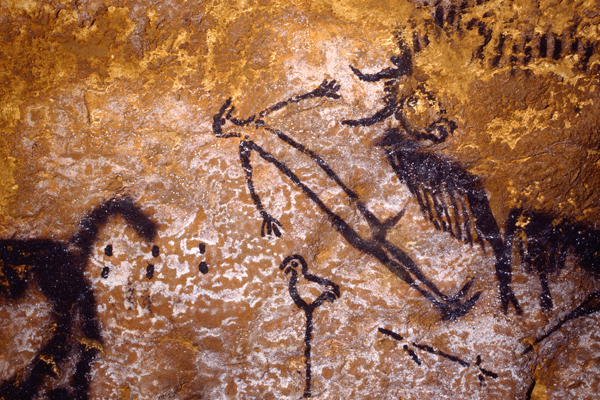
Cave paintings from the prehistoric era often depict a nuanced, shadowed, fully rendered animal, and then… a human stick figure. George Bataille (in one of our readings) speculates that this is because human beings, for most of human existence, did not perceive of themselves as the protagonists standing above and apart from their prey. They knew many animals around them to be graceful, fast, powerful, wily. They readily observed these animals undergoing their own mental and emotional processes. Surely, they were worthy of being rendered in detail.

Humans, on the contrary, are often a minimal element: the one holding the spear, the one hunting, but hardly the focus.

Field Museum 6

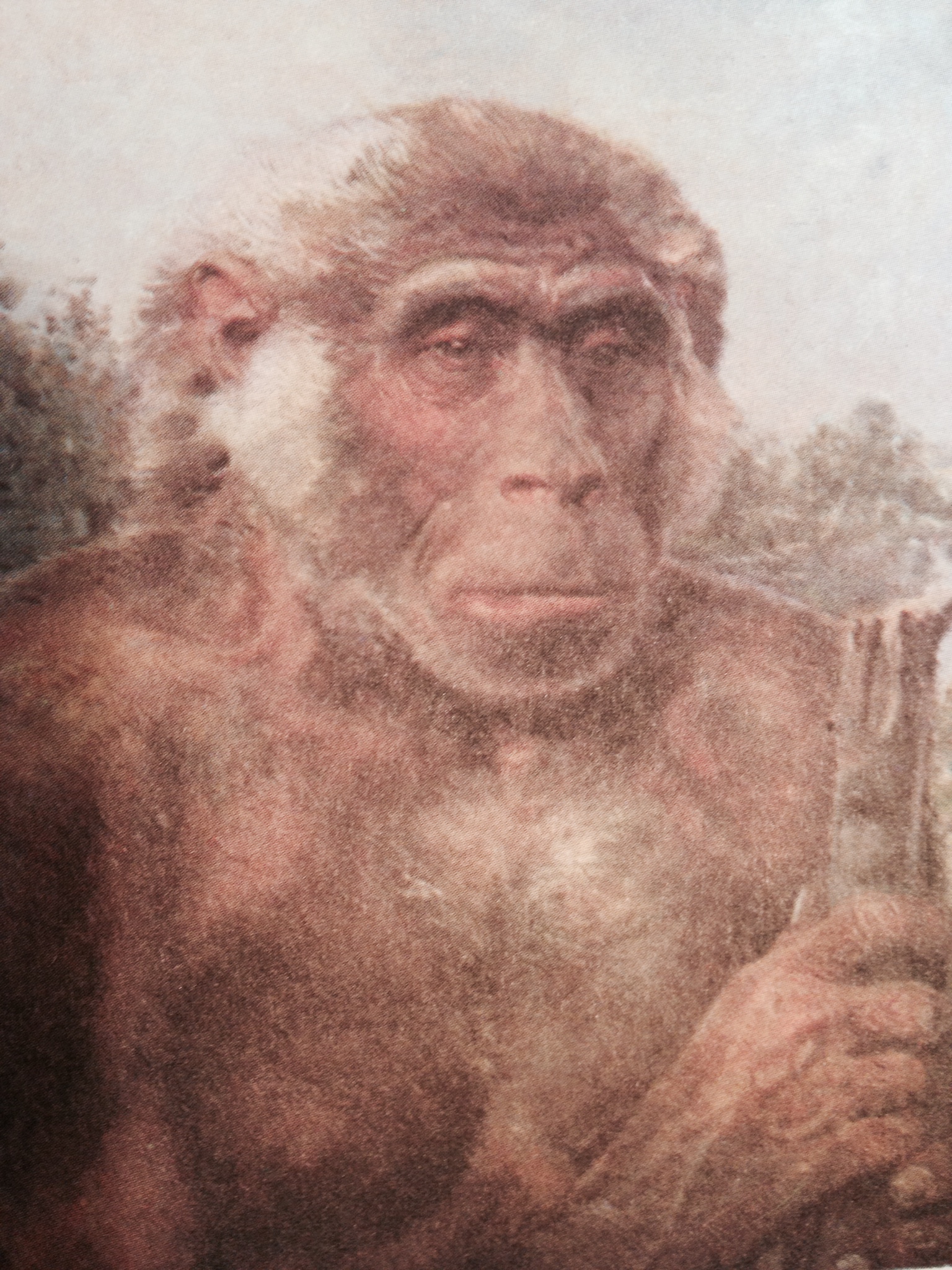
I drew the group’s attention to the illustrations in a book entitled “The Dawn of Man,” which I have had since a young boy. One in particular cracked me up when I pulled this book down from the shelf last week in anticipation for this meeting.

It depicts a distant relation of ours, Heidelberg man, from the Middle Pleistocene of Germany.

What amuses me about this artist’s rendering is that this primate relative is posed in a manner suggesting the Mona Lisa, staring at us in the foreground, with a line of lush trees creating depth of field behind. We can imagine that this would never have been the way that prehistoric people would have rendered themselves. It assumes an entire ideology of dominance over, and separateness from, nature, in its very composition.

Here it is. See?
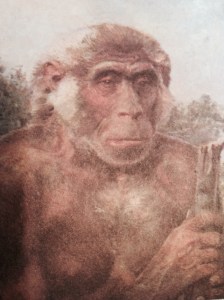
photo-19

Something about the modern assumptions behind his “pose” just gets to me every time I look at it.

We talked more about our relationships to animals. Renée embarrassed me by describing the elaborate growling noises and the bizarre contortions of my body that occur when I try to chase off a neighborhood cat who is terrorizing our own. I conceded that this is perhaps the closest I get to a communion with an animal, since I have to imaginatively enter the mind of a cat defending its territory to embody it.

Richard pointed out that if, in prehistoric times or any time, humans perceived themselves as “equal” with other animals, than rather than suggesting their equality, this very perception marks them as strikingly different! No other animal, he conjectured, would try to see deep into the eyes of a human so to experience its wholeness. It would simply see delicious flesh to tear with its teeth. Or a clumsy, crashing figure, smelling of fear, tufted with hair, from which to flee.

So the cave drawings of prehistoric humans might actually suggest the uniqueness of human consciousness, leading through our symbolic thinking to a kind of imagined meeting-of-the-minds with other animals (where, in fact, one can never occur).

This point led me to read aloud to the group a poem by Robinson Jeffers, which takes Richard’s point about the absurd and self-denying nature of this impulse to see ourselves as equals to other animals to its logical conclusion:

Vulture

I had walked since dawn and lay down to rest on a bare hillside

Above the ocean. I saw through half-shut eyelids a vulture wheeling high up in heaven,

And presently it passed again, but lower and nearer, its orbit narrowing. I understood then

That I was under inspection. I lay death-still and heard the flight-feathers

Whistle above me and make their circle come nearer.

I could see the naked red head between the great wings

Bear downward staring. I said, “My dear bird, we are wasting time here.

These old bones will still work; they are not for you.” But how beautiful he looked, gliding down

On those great sails; how beautiful he looked, veering away in the sea-light over the precipice. I tell you solemnly

That I was sorry to have disappointed him. To be eaten by that beak and become part of him, to share those wings and those eyes–

What a sublime end of one’s body, what an enskyment; what a life after death.

7. Humans — Understood as Animals — Dealing with… Climate Change?

Dean spoke up to say that he is convinced, and has been as long as he can remember, that we are merely animals. That’s no problem for him to accept.

It troubles him when he thinks how humanity’s self-aggrandizement, over the past 5000 years, has led to terrible consequences by severing us from nature. This is what we do, he insisted, as animals who think they are “special”: consume resources at a high burn rate, putting the planet at risk.

Now, though, Dean argued, we must use our developed prefrontal cortex, our ability to reason, to reverse the damage we have already done. The only way to tackle climate change, for example, is to… get over our short-term thinking and self-defeating behavior brought on by our genetic predisposition.

I pointed out that there is a tension in Dean’s outlook. On the one hand, he seemed to be saying that we need to accept our status as animals, so we don’t sever our connection to nature. On the other hand, we need to “rise above” it to save the planet.

I questioned whether we really “rise above” our animal nature. Again, this seems to me a language of the past. Our prefrontal cortex, and our ability to represent our world and thoughts in symbols and verbal language, are, in fact, also part of our animal nature, are they not?

I drew on the analogy of a camera — with an automatic setting and a manual setting. Most of the time we operate on the automatic setting in our brains. This leads to some good results (“common sense,” it is often called). But in an increasingly complex world, it leads to some terrible results, very out-of-focus pictures, too. For example, one thing that is part of our “common sense” is that we tend to be suspicious of people that look different than us (automatic setting). As the world becomes more pluralistic and diverse, this hampers trust and open communication (in addition to being hurtful and unjust). So we become educated and learn to use our “manual setting” to make sure that we do not judge people harshly because of perceived differences (when you think about it, our legal system at its best is a kind of enforced manual setting — innocent until proven guilty, rules of admitting evidence, etc.). But my point is, I continued, it is important to recognize that BOTH of these systems belong to our animal nature. To “rise above” perpetrates the same separateness that Dean rightly condemns.

He conceded this. But his point still remained: how do we, animals that we are, deal with a problem like climate change?

Penda commented that, in her experience, the more simply people live, closer to the land, the more responsible they are about not damaging their environment. So by living in a small setting, among people whom one considers whole and irreducible and unique, among animals that one knows and respects in all of their wholeness too, people become more attune to living harmoniously with nature.

Yet Lucie pointed out that when we are in this present state we often cannot see the long-term, abstract consequences of our actions. Climate change, after all, would not be detected by people living simply in a small village. They would detect famine and drought (the effects of climate change), but they would not see the centuries long trend lines.

The combination of these two points struck me as a tremendous insight, which we may need to grapple with many times in this group.

We have two very different capacities as humans. On the one hand, we have our ability to live simply, attentively, and rewardingly, in a small community. I think of my mother’s extraordinary ability to be loving and present to everyone with whom she meets during her day. I think of the generosity and hospitality towards strangers often demonstrated by people living in rural settings the world over. On the other, we have the capacity to abstract from our experience, to see people as data points, and create models of our world. The remarkable edifice of science is a result of this approach — we learned to look to impersonal data, to rely on objective standards (interestingly, the values of science are, contrary to how our culture depicts them, very personal and human-centered, I would argue — truth-telling, evidence, parsimony, verifiability. But that is an argument for another time.)

The problem is that as we turn away from the more personal to our more linear or abstract thinking, our “prefrontal cortex” thinking if you will, we become ever more removed from that small village sensibility, that subjective and emotional connection to the world around us…

Perhaps, I asked, there may be a way to bridge this gap?

Perhaps there will be a way to use our “small village” sensibility to create, metaphorically at least, a link to the abstract knowledge that comes from leaving it behind? This, I would contend, is the only hope we have for combatting climate change.

Not dry argument, but personal, emotional –even, shall we say, tender? — engagement on a global scale. Is that even possible?

Otherwise, as a few of us had joked earlier in the evening, someone can feel very alarmed about climate change and carbon levels in the atmosphere — until he or she is offered the keys to a shiny  new, leather-upholstered SUV for free — Look! It’s yours and outside the door now! At this point  his or her neural networks light up brighter, I am afraid, in the desire centers of the brain than the low-level glow in his or her neural networks brought on by thoughts of climate change. We all fail this test everyday. It will have to be personal.

Again, being animals, I argued, I don’t think it coherent to think of us overcoming or “rising above” our nature. We must engage it, acknowledge it, and see the earth in a new “whole” manner, as a once stranger who is now our guest…

8. A Discussion About One of the Readings and Our Approach to Knowledge

A few members of our group, Marie-José, Setenay and Miriam, raised their objection to one of the reading selections for this month.

They were okay with the discussions of the practices of native peoples of America in The Ohlone Way and The Way We Lived. Nobody spoke to Abram’s Becoming Animal. And although Florence complained about the awkward translations, the poems largely passed muster too.

But the two chapters that I excerpted from The Cradle of Humanity by George Bataille really irritated some members.

Marie-José felt that Bataille’s tone was typical “white male”: impossibly certain, patronizing, self-involved. Setenay called him “unbearable.” Miriam shook her head in dismay.

Others in the group acknowledged that his tone was a little dated — we laughed about how he mentions his feud with Sartre at the beginning of one lecture with not a little self-inflation. Yet many of us did not find it so off-putting; you might say we discounted the “white male” obtuseness and read him for what insights he might have despite his dated tone.

After all, I argued, Batialle does acknowledge that he is not himself a “pre-historian,” and he concedes that his speculations about prehistoric cave paintings and culture are just that — speculative — right? He is admittedly just making it up as he goes. So, I asked Marie-José, is it that you don’t think he should be making these kind of speculations or assumptions at all? Or that he simply makes ones different from the ones you make?

Setenay clarified that it was not just his tone that troubled her. She said he was indicative of a larger confusion that she had with our group: she found herself torn between the two very different approaches we seemed to be taking towards understanding prehistoric people and their world.

On the one hand, when she learned that this was to be the topic, her expectation was that we would review the latest scholarly literature in the fields of paleoanthropology, paleoarcheology, etc. Then, she figured, we would be very specific about what claims we are making in terms of burial sites, tools, etc. That, clearly, was not the approach we took.

Or, she realized, we might look at prehistory as a metaphor, knowing that we are not necessarily getting an accurate picture of their lives, but using our imaginations to conjure a world that we can stand up as a kind of mirror to our own. This, she discovered in the readings and in the meeting, was more our approach.

Yet she found that Bataille’s looseness made her long for a more academic approach. Being a scientist, she wanted to get more specific in our data.

I thought this was an excellent description of two general approaches we might have taken. I explained that, although a more scholarly approach would be, without a doubt, fascinating and worthy, that doesn’t strike me as within the purview of this group.

At UC Berkeley there are no doubt in-depth courses meeting this fall that examine the prehistoric era. (Although even these scholars get it wrong and face ongoing disputes in the field, we can be sure that they are admirably getting closer and closer, with careful scholarship.)

I explained that my idea for this group is different, however. It want to use our readings each month as a kind of metaphor, a kind of mirror held up to our own present-day lives.

Any tension she felt on this I agreed is certainly valid, however — I feel it too. And I think it is a tension that we will feel often, as we read excerpts (but only excerpts, for lack of time) from different philosophers and poets and artists and writers and scholars and scientists from different historical epochs, with the aim of provoking us… instead of getting the scholarship exactly right.

(E.g. David Hume’s drawn-out epistemological argument about “secondary qualities” is not going to get as much time in that month’s discussion as his explanation of how human beings develop moral principles by way of a public language of praise and blame. Sorry, but we have to prioritize…)

To the argument that our approach might be miss certain things that a scholar would consider important, therefore, I would answer: yes, undoubtedly! But if we are seeking a rewarding and possibly life-changing alteration of our sense of ourselves as we live today, then sticking with a straightforward academic approach would, I would argue, also potentially miss important things.

For sometimes the scholar can miss the forest for the trees; in such cases he or she may only indirectly touch on the great forces working under the surface in our lives: our sense of ecstasy, of love, of sorrow, our fear of death, our deepest commitments.

And anyway, metaphors, we should remember, are not lightweight — they are a way into ourselves. They are, ultimately, how we frame the narratives of our lives. I would argue that both the academic approach and the more reflective approach are worthy.

9. Looking to Prehistory for an Updated Story of Our Origins

Setenay and I had a chance to carry on our discussion after the meeting, and by the end of it I believe that we arrived at a clearer picture of why looking at prehistory is useful.

It struck me, talking to Setenay, that even while pursuing a strictly non-supernatural approach to the important questions in our lives we still feel a need for a compelling story of our origins — if only as a kind of starting-point to our investigations.

These origin myths have important consequences.

Think of Hobbes: the “life of man” in a state of nature is “solitary, poor, nasty, brutish and short.”

Think of Rousseau: “Man was born free, and he is everywhere in chains.”

Both are myths of what we were like in a “state of nature,” leading to very different conclusions about how to organize society.

Now here’s our chance… What do we want to base the story of our origins on?

The latest scholarship?

A piece of fiction we make up, whole-cloth, in the vein of Hobbes and Rousseau (or Christianity or Hinduism or other religions)?

Or something in between?

We would hope that our updated story will not fall prey to the magical thinking and creaky in-group/out-group thinking of the old Bronze and Iron age myths of the major religions. (Enough with the snakes and the booming voice of God, please.) Yet we can admit that, no matter how hard we try to resist it, we will ultimately have to base even this updated story of our origins on finite knowledge. Revision will always be necessary.

Again, this is not to say that an updated story of our origins will be equivalent to all other myths, from Christianity to Islam to Wicca to Ayn Rand’s Objectivism… Some myths are outdated and based on obviously dangerous or damaging beliefs. Let’s not fall into the trap of false equivalence!

But, yes, just as science is always indeterminate and ongoing, our understanding of the world around us and our own selves will always be indeterminate and ongoing.

I concluded from this conversation that we certainly do not want to make it up whole-cloth. After all, we are hoping, with all of our limitations, to develop an understanding of ourselves that resonates with our current knowledge about the world as is. And this requires adherence to the facts as best we know them. Then we can take it from there…

So I ended up, after the meeting, feeling more conscious than before of the need to explore our “story of origins” based on the latest paleoanthropology, paleohistory, paleoarcheology. Even knowing that we are looking at it as a metaphor, we will benefit from being as accurate as possible.

In short, I think we should revisit this in another meeting! Thank you Setenay!

10. One Last Round

Brad got our attention, near the end of the meeting, as it neared 10:30 pm, by bravely stating that the evening’s discussion had left him feeling “disturbed.”

If we are only primates — animals — he explained, then he found himself feeling horrified at the prospect that he is part of this species. Considering the damage we are doing to the earth, considering the crass culture around us, then he is finds himself implicated by this particular bipedal primate species’ failings.

I roared back (he’s my best friend, so I can do that with Brad):

“Disturbed? Why is it disturbing? For all of its vulgarity and violence, the world is full of extraordinary beauty too! Just look out that window,” I said, pointing out to San Francisco. “Think of the wonders out there. The medicines that save lives. The gas which gives us a warm fireplace right now. Look at the faces in this room, how full of love and longing each is…”

“I’m disturbed. I don’t want to debate you, Tom. I am saying how I feel.”

“And I love that!” I exclaimed. “I am glad you did. But I am giving the opposite perspective. I think if we accept ourselves as animals then it is clarifying — and liberating. Finally, we can look honestly at the choices we make, the trade-offs, the responsibilities we want to take on or choose not to take on…”

Nadine spoke up to say that she felt that humans, animals that we are, have a sense of guilt and shame for what is done by our species. We are aware, she said, of the many bad people in the world, the ones doing damage or inflicting cruelty, and it makes us feel implicated. Walden supported this by observing that we are the only animal who feels remorse.

But I challenged this too (holding back the roar this time): “I think this is a case where the language you are using is archaic,” I said. “There are not “bad” and “good” people. We are ALL implicated because we are ALL capable of making poor choices, complicated choices, and all of our choices do harm to someone, deprive someone of resources, exclude someone. Think of private property — right now there are people hungry, in Berkeley, and a monopoly of violence that we assign to the State prevents them from eating because of an artificial construct called ‘property’!

“Which brings us to the value of accepting our status as animals again,” I concluded. “Once we accept that there is no escape from the hodgepodge of impulses and motivations and last stands and sudden reversals that is our brain, then — only then — can we start to talk honestly about how we want the world to look. And what we are willing to do to make it look that way…”

It was a debate that surely we will continue.

Great meeting, everybody. Much to think about. I am so thankful for the open-hearted and open-minded way everybody at the meeting participated.

As always, please make any additions or corrections you have in the comments below.

See you next time!

Reading for the Second Meeting — EPICUREANISM

TUESDAY, OCTOBER 21, 2014

The next meeting. Our second meeting.

For our first we looked at… where we come from.

For this one we’re going to look at… where we are going.

*

There really isn’t any question about where we are all going, is there?

Like a great play, life is filled with moments of grace and beauty, laughter and joy. Perplexing moral dilemmas. Daunting challenges overcome. We wouldn’t give it up for a second.

But in the end, life is — I am sorry to say it — not a comedy, folks.

Like The Orestialike Hamlet, like Lear our lives belong, unmistakably, to the literary genre of tragedy.

hamlet

As much as we try not to think about it, we know it’s true: our lives are going to end in death — often bloody, usually painful. For everyone.

Damn it, but it’s true.

*

For this next meeting we are going to confront this head-on.

Death — the “undiscovered country,” as Shakespeare called it.

(Though as my son pointed out to me, it HAS been discovered — just nobody has ever reported back. Kind of like the Vikings finding America?)

VikingLongship2

How does it change things to know there is an end?

What does a person do with this life?

*

Please note that this month we are going to have our meeting on the second Thursday, November 13,  instead of third (due to a conflict for a lot of members in the group). I hope that is ok with everyone.

Our meeting will focus on the teachings of the ancient Greek philosopher Epicurus, and the conflict between Epicureanism and the religious/supernatural outlook that opposes it (and triumphed — until now).

bronze

Epicurus (341 BC – 270 BC)

Epicurus is the first philosopher in the Western tradition to look at lived experience, as opposed to gods or spirits or immaterial ideals, as the proper guide to life.

Epicurus’ famous four points are:

1. There are no gods or other divine beings to influence your life — so don’t waste your time on them.

2. There is no after-life. Deal with it.

3. All that is important for a good life is already available to you.

4. All that is terrible in life, i.e. suffering, is not worth worrying about… since it is usually either chronic or intense, but not both.

In this month’s reading I have included:

  • The Epicurious Reader;
  • Some chapters from Stephen Greenblatt’s The Swerve about the re-discovery (in the 15th century) of a famous paean to Epicurus, “On the Nature of Things” by the Roman poet Lucretius;
  • Some excerpts from Lucretius’ “On the Nature of Things

I may post more over the next weeks. Also, please feel free to find your own additional readings and materials online or elsewhere.

Enjoy! See you on the 13th.

On Théodore Monod

FRIDAY, OCTOBER 31, 2014

by Florence Joliff

[In our October meeting, Florence mentioned to the group that in thinking about the prehistoric era she had been led to the writings of Théodore Monod, a French explorer, anthropologist, poet and writer. I encouraged her to share on the blog some of what she had read… if she would be so kind as to translate it into English (most of his works are not translated). Florence sent the following by email.]

5887994185_b602408e14_z

Théodore Monod: anthropologue, explorer, poet, writer

He wrote many books about his various explorations, always deeply interested in humankind, the definition of “progress”, and also obviously the ” modern” human relationship to nature.

He was an incredible nature lover and a great poet, also!
He conducted many observations, explorations, and trips in the Sahara desert ( and others) and found many paleolitic objects, paintings, etc.

His books are fantastic and a true pleasure to read over long period of time… I just wish he was translated in English! (other than the one book Desert).

Basic summary of some of his ideas:

Monod enumerates three steps/stages in recent humankind evolution:

1. The original relationship of man among other animals (magical and symbolic links with nature, and he argues that it is appropriate to still have some today);
2. Then the “divorce” with nature, leading to the “progress” of human power, rationalisation and domination etc. (He also recognizes the great steps in science);
3. And finally, our current “reconciliation need ” (this was my favorite part of his writings), namely, our need for a new way of thinking. Very similar to us!

SOME KEY SENTENCES I have extracted from his books:
To lead to the area of ” big stable joys”, humankind must be freed … by (among other elements) its sympathy, and establish a system of new moral values based on a general respect of life under all its shapes( animals, plants, living bodies).
He is inspired by Albert Schweitzer ‘s philosophy (in 1915) and also, briefly, Albert Einstein’s writings and thoughts…
Modern life, he held, must not be based on material comfort and individualism.

From homo “sapiens” to today homo “economicus”, all moral codes have been defined by religions and ideological systems.

Today humankind is facing new problems and issues generated  by the religion of progress, material profit, and “technolatrie”.

We must find again the “unity of things and living beings” with key words like: solidarity, communion, sympathy (empathy for others/ for all living beings)….
We must create a moral view as strong and demanding as our modern power. Otherwise we are in big danger of disappearing …
We must reconcile being and having.

He also makes reference to Victor Hugo very often: celui qui ceuille une fleur derange une etoile…
He wishes to live his life as his friend Teilhard (who had two passions: the love of science and the abiding question of god):  more eupraxie than orthodoxie: more rectitude of conduct than adherence to dogma.

Not sure this is clear Tom …and not perhaps very loyal to Théodore Monod (I have made a very approximate translation: Théodore Monod is much more complex and beautiful and simple in his writings).

Why the World Needs a Non-Supernatural Approach to Big Questions

TUESDAY, NOVEMBER 4, 2014

I had two recent reminders of how important it is for us and others to develop a decidedly non-supernatural approach to all the big questions of life, and I thought I would share them with the group.

Reminder #1

Over recent weeks, on his popular blog The Daily Dish, the writer Andrew Sullivan has engaged his readers in a conversation about Sam Harris’ new book, Waking Up: A Guide to Spirituality Without Religion (a book I found well worth reading, by the way).

In an early post, Sullivan, who is Catholic, discusses his and Harris’ different understandings of the tranquil feeling of “self-transcendence” that can arise during meditation or prayer (or even, unbidden, at other times).

In his usual concise manner, Sullivan lays out their opposing views:

“For Sam, this is evidence merely that meditation works, that stilling unending thoughts enables a person to live mindfully rather than to experience life as one goddamned distraction after another. He sees this as proof of the absence of a self and a way to live with clarity and calm as we are beset by feelings and passions, good and bad.

But the Pope suggests another way of seeing this: not as proof of the absence of self so much as the simplicity and calm of being oneself with God. It is a mysterious way of being, this communion with God. And maybe, experientially, it is indistinguishable from Sam’s meditative clarity and occasional epiphanies. But in it, for a Christian like me, the self does not disappear. It is merely overwhelmed by divine love and thereby fully becomes itself. In fact, this is the core mystery of our faith: communion with something greater and other than us, and a communion marked by love. In fact, something even more miraculous than that: a divine love that actually loves you uniquely.”

This irritated me.

It irritated me enough that I tapped out a quick email on my iPhone, while the kids jabbered and giggled around me.

I’m happy to say that Sullivan was good enough to include my contribution in his ongoing discussion with readers. (I am the “Another is more critical” in this post (click here to read).) Here’s what I wrote in full:

I love both you and Sam. I really do. I’m with him on the dangers and damage wrought by religion. With you on most political issues. But on this question from Waking Up, regarding the nature of the so-called “selfless” state of mind human beings sometimes experience during meditation or prayer, I’m afraid you are both wrong.

Andrew, why do you both seek transcendence so badly? For what you feel, what we all feel in these oceanic moments, is neither an experience of being flooded by God’s love (your view) or a glimpse into the underlying “selflessness” of consciousness (Sam’s view).

It is simply one way – one particularly harmonious and happy way! – that our particular species of primate experiences neuronal/electrical activity in our brains. We may speculate that meditation, prayer and the like probably have the effect of quieting activity in the left hemisphere and facilitating a more direct experience of the intuitive, non-verbal right hemisphere … something like that …Whatever it is, it is most certainly NOT anything transcendent, nor showing us a “truth” about the selfless nature of the universe. It is part of what our limited biology, fashioned by millions upon millions of years of adaptation, does.

Why is it so hard for you, and now Sam too, to accept your body and brain for what they are: your ONLY portal to experience, limited as they are, sometimes impulsive and directed, sometimes undifferentiated and peaceful, but always YOURS, beautiful and mortal and precious.

It is always self, and that is okay. Andrew, I say lovingly: go with the love you feel, and you can leave out the “God” part. To Sam I want to say: go with the love you feel, and you can leave out the incoherent idea of some “selflessness” uncannily experienced by the self.

155 years after On the Origin of Species and this is still hard for people to accept. But once you do it is clarifying, and liberating. It’s all natural, all animal – all the way down.

This may sound familiar to members of our group? You know my rants already.

Both Andrew, a Catholic, and Sam, an atheist, seem to be hung up on looking for a way “out” of self. As you know, I think that’s an old habit, inherited from religion.

In The Old New Way, as I see it, we are looking to find a way in — to be fully accepting of our place on this planet and in our bodies (with all of our limited cognitive capacities and conflicting moral drives and rapidly shifting emotional responses).

We want to accept ourselves as we are now. That, I think, is the right place, the only place, from which we can begin asking interesting questions about how to conduct our lives.

Beautiful. Mortal. Precious. Isn’t that enough?

Reminder #2

I had the pleasure of reading this week the biologist E. O. Wilson’s new book, The Meaning of Human Existence.

It was affirming how much Wilson is doing the same thing in this book that we are attempting in The Old New Way.

He begins his argument with an emphasis on primatology and prehistory (closely tracking the discussion we had in our first meeting), and then he takes off from there, trying to articulate a new perspective just as we are.

Here is what Wilson writes in the final chapter:

“The perquisite for attaining the goal is an accurate self-understanding. So, what is the meaning of human existence? I’ve suggested that it is the epic of the species, begun in biological evolution and prehistory, passed into recorded history, and… also what we will choose to become.”

But he knows that this will not be easy:

“The problem holding everything up thus far is that Homo sapiens is an innately dysfunctional species. We are hampered by the Paleolithic Curse: genetic adaptations that worked very well for millions of years of hunter-gatherer existence are increasingly a hindrance to global urban and technoscientific society…”

And he ends with an acknowledgement that any threat to the supernatural claims of the world’s major religions will be perceived as an attack, totally out of bounds, even taken as an expression of a “phobia”…

To this familiar response, he answers with an eloquent line:

“The idea is to place the personal dignity of the believer above the dignity of the belief that demands unquestioning obedience… That would be a true cry of freedom.”

I liked that.

A cry for freedom. Yes! That’s one way to see what we are up to.

Seeking a more accurate self-understanding. That too.

And finally, an acceptance that our lives are… beautiful, mortal, precious.

Can this “mortal” aspect of our lives be part of a net positive, when all is considered together? It is traditionally seen as a curse, a doom, a threat  — hence fables about an after-life. This, I think, is a crucial question that we will consider at our upcoming meeting (on Epicureanism).

Let’s keep at it. We will get somewhere, I am sure of it, one meeting at a time.

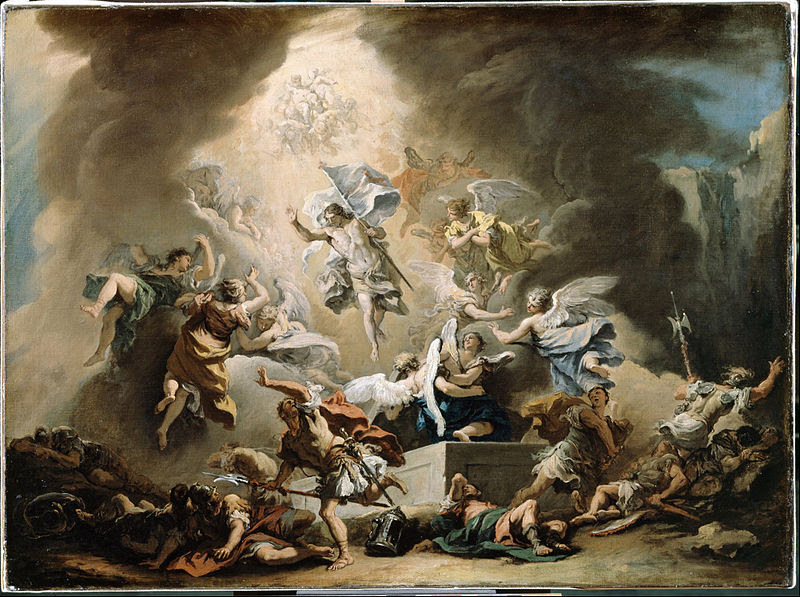
What Images of the After-life Did We Have When We Were Young?

SATURDAY, NOVEMBER 8, 2014

At our next meeting, on November 13, we will examine the writings of Epicurus. Some of the questions that are sure to come up will concern the possibility of an after-life — or the lack thereof.

In anticipation of this meeting, I would like to invite members of our group to share with the rest of us some of the most vivid images of the after-life that come to your mind…

Take a moment to meditate on those images that, for whatever reason, traced themselves deeply in your neural networks when you were a child. The more unexpected and strange the better!

*

Why am I asking the group to share these images?

I have a hunch that, at our meeting it may be fruitful to examine some of our assumptions and fears regarding what happens after death by way of visual, non-verbal cues, rather than getting bogged down in words.

You can add your images in the comments below, or email them to me and I’ll post them.

*

To get us started, here are some of mine…

Probably my first strong encounter with death was when I saw the movie “King Kong” (1976)… I must have been about seven when I saw it. Remember when Jessica Lange must say goodbye to Kong?

There was no suggestion of an after-life. But I remember feeling shocked that everyone else in the movie would go on with their lives, while King Kong would never breathe again.

When my family moved to Hong Kong (we lived there between 1977 and 1981) I remember visiting a monastary where there was, on display, a dead monk covered with gold leaf. That made an impression.

Ten+Thousand+Buddhas+-+Corpse2

Does this qualify as an after-life?

Then there’s that scene of Purgatory in the movie “Heaven Can Wait” (1978; I was nine), which stunned and terrified me (full disclosure: my childhood dream was to play quarterback in the NFL, so it cut particularly close to the bone).

Here’s the clip that set my mind racing:

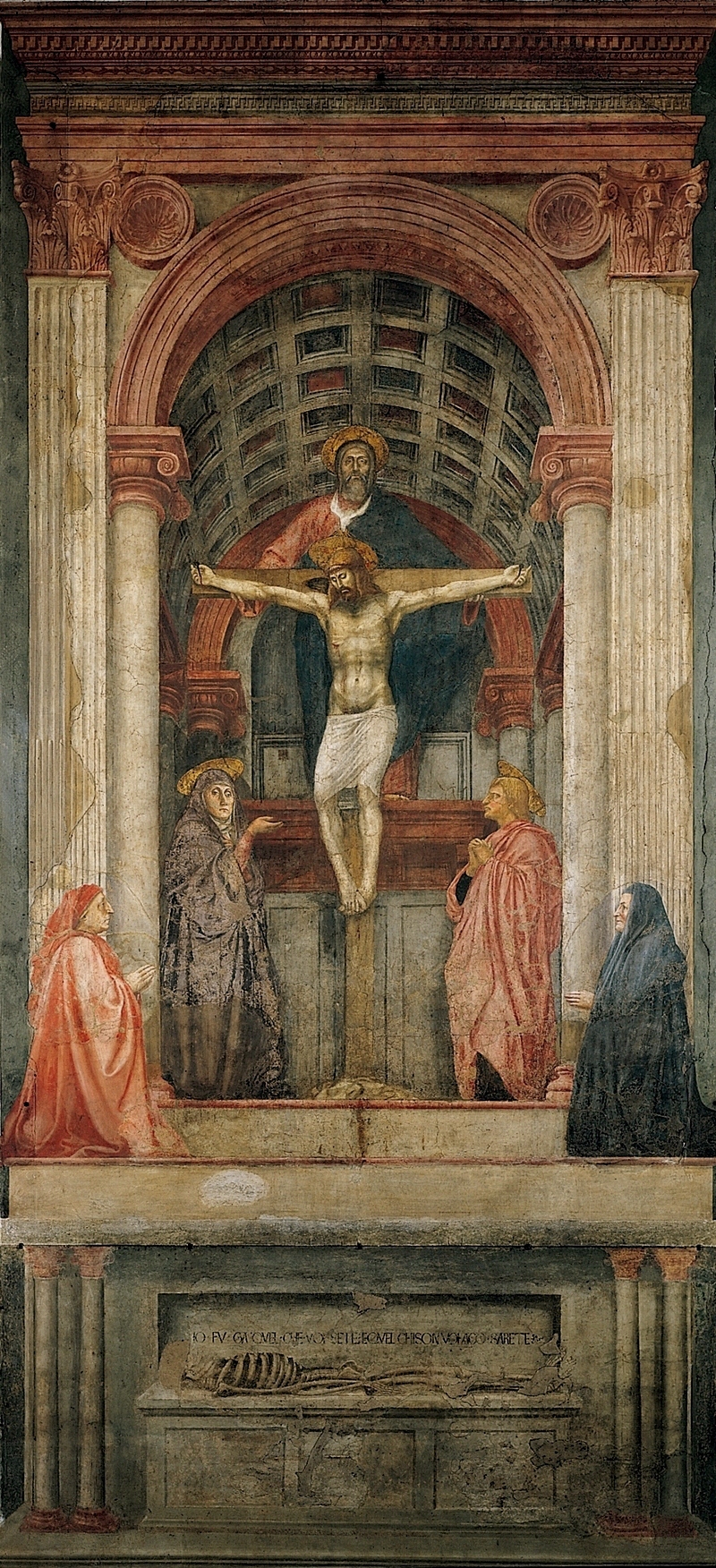
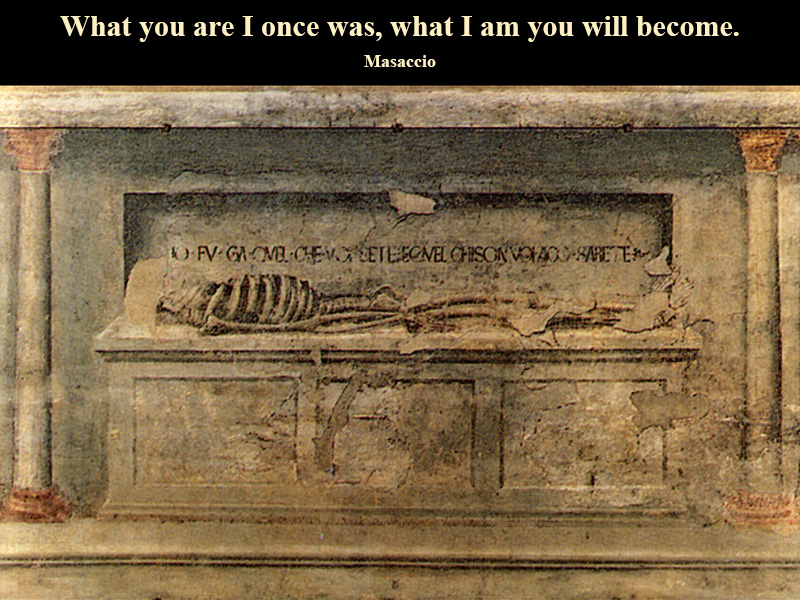
But probably the most powerful image of an after-life that I encountered was in an art history class in my senior year in high school (I was 17, I think). My teacher put up a projection of Masaccio’s Holy Trinity, and something strange happened in my head.

Masaccio,_trinità

(For a short video about this work, click here.)

I felt a surge of joy, and I couldn’t look away. It was all there: life… death… and the after-life, such as it is.

At odd moments during the day, for years after that, the image of that skeleton lying at the bottom of this image would come back to me. The Latin inscription above his reclining figure is:

masaccio_trinity_quote

Thank you, Masaccio, for clearing that up!

What else, let’s see… Crazy as it sounds, the Pixies’ “This Monkey’s Gone to Heaven” actually moved me with the finality of the end for the eponymous “monkey” (aka “an underwater guy / who controlled the sea / got killed by 10 million pounds of sludge from New York and New Jersey,” aka a symbol of humanity?)…

*

Okay. That’s what I can come up with right now. I’ll keep adding more as I think of them. How about you?

*

From Sheri

I was six and in love with our two puppies, “Nip and Tuck”.  After school one day I could not find “Tuck”.  They were always together.  We lived on an island in a lake in Wisconsin.  My mother said that she had no idea where he was, and suggested that I ask all the neighbors on the island if they had seen Tuck.  After
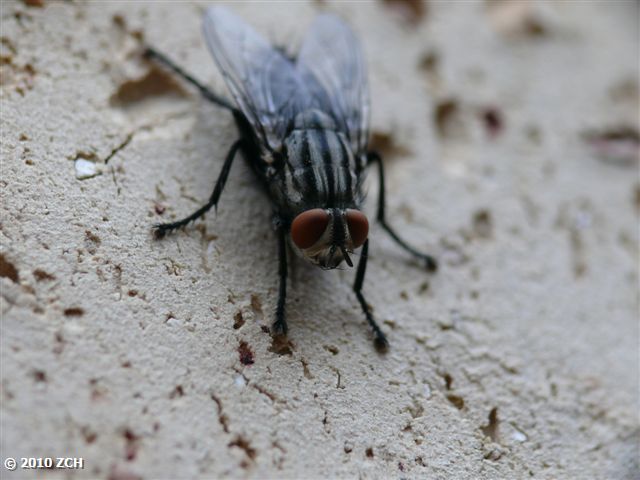
making those rounds with no sightings, I returned home miserable, teary, and desperate.  It was then that my mother admitted the truth:  Tuck had been hit by the milkman’s truck as he swung into our driveway and was dead.  “I want to see him dead”, I said.  Very reluctantly she led me to the row of garbage can outside our gate.  In an old cardboard box my Tucky lay, eyes open, flies covering his eyes and body.  This is it then, death?

Red eye fly - ugly-800

From Claudine

Then:

unnamed

unnamed-1

unnamed-2

Now:

unnamed-2

From Jeanne

Some of my wishes for an afterlife was having my own private angel, like Clarence in “It’s a wonderful Life”  Well maybe a bell won’t ring when my angel get’s his wings, but it is still one of my favorite films with a beautiful message about appreciating what you have.
Even as an adult, I was really affected by the beautiful paintings, and supernatural world after death,  and finding solace that things will be OK, for the departed  in “What Dreams May Come.” A good friend worked on paintings for this film, and her description of her creative process in painting the images affected her in a profound way. She entertained the possibility that this could be the reality of afterlife.  There was a moment when I asked myself, Could this be true?” But , I just could not let myself go there, I could not see how a being could actually enter an alternate world. The truth was, and still is that I wish it were true, but I know that it is not.  


Notes on Our Second Meeting — EPICUREANISM

SATURDAY, NOVEMBER 15, 2014

There was much good cheer and buzzing conversation as members of our group arrived, so it took some effort to move everybody into the living room to begin our discussion.

But we managed! At about 8:35 pm, with our glasses refilled with wine and the fire roaring, we began meeting #2.

1. An Overview of Epicureanism

Before we began in earnest, I thought it might be helpful (particularly for those who had not had a chance to look at the readings), if I briefly summarized the philosophy of Epicurus.

I mentioned that, along with some other thinkers of his time in 4th century BCE Greece, Epicurus believed that everything in the universe is made up of tiny, indivisible particles — which they called “atoms” (a term that would be co-opted by chemists and physicists in the 1800s, so as to become familiar to us today).

From this Epicurus concluded that our universe is entirely material.

Despite his materialistic understanding of nature and the larger universe, however, Epicurus was not a determinist. He accounted for free will by way of something he called the “swerve,” in which one atom unpredictably changes its course. (At least in a poetic sense, this notion of a “swerve” brings to mind the discovery in quantum mechanics of wave-particle duality, i.e. whether a photon expresses itself as a wave or a particle will change, depending on what we do to it. Though, we might note, the question of free will is no closer to being clarified today than it was in ancient Greece!)

But enough of these speculations about the physical world… What did Epicurus have to say about how we should live our lives?

Epicurus argued for a simple, streamlined life, with a focus on friendship and reflection.

His famous four rules are:

i. Gods, if they exist, are not relevant to human life. He acknowledged that gods may exist, but he dismissed any possibility that they might be willing to intervene, or even show concern for our needs, in any way.

ii. There is no afterlife. When we die, that’s it… Sorry if you had your hopes up for mingling with Achilles and Patroclus in the Elysian Fields!

iii. Pleasure is available to us with minimal effort. He maintained that almost all of us have enough resources available to us, already, to secure our pleasure — a little water, a little barley, and you’re good! The rest of it is a distraction, not necessarily to be shunned (that extra piece of caramel is fine, take it!) but best if understood as such.

iv. Pain is not worth getting worked up about. As for suffering, Epicurus reassured his followers and readers that it is very rarely chronic and intense at the same time — so it shouldn’t cause us too much anxiety.

This notably human-centered, pleasure-seeking, materialistic philosophy was almost lost, following the conversion of the Roman Emperor Constantine to Christianity in 313 CE and the triumph of the monotheistic traditions during the Dark Ages.

Except that it wasn’t lost entirely. It happened to get smuggled into the Renaissance — in a beautiful form! In the year 1417, a well-to-do adventurer and budding humanist, Poggio Bracciolini, set out from Italy to look for old Latin manuscripts. Poking around the library of a remote German monastery, he came upon a manuscript called “On the Nature of Things” by the Roman poet Lucretius, who had lived in the first century BCE.

By bringing Lucretius’ poem back to his circle of friends in Florence, Poggio preserved for us a faithful rendering of Epicurean thought, and one infused with great feeling. Copies of “On the Nature of Things” were passed, hand to hand, person to person, country to country, until Lucretius, and through him Epicurus, influenced such thinkers as Montaigne, Bacon, Shakespeare, Galileo…

Yet the story doesn’t end there, either.

For Stoics in the Roman era, and Christians and monotheists of all kinds ever since, the materialist philosophy of Epicurus posed a threat to their invisible orders (the “logos” or “universal reason” for the Stoics; “God,” “Allah,” “Spooky Electric,” or what have you for the religiously inclined). Hence, despite the discovery of Lucretius’ poem, the dominant discourses in our world have come down very hard on Epicurean philosophy for all these years, turning it into the caricature we know today.

As a result, it is associated in many people’s minds with a lavish meal, or with a dissolute life-style. For most of us the phrase “Eat, drink and be merry” comes to mind when we think of Epicureanism.

Escargot, swimming in garlic and butter. A rich creme brûlée…

The gout.

That kind of thing.

Yet many have managed to look past this caricature, too, and they have found themselves drawn to Epicurean thought.

Thomas Jefferson, who called himself an Epicurean, managed to slip the words “and the pursuit of happiness” into the Declaration of Independence. No small feat, that, with no small consequences for American culture. In recent times the ubiquitous contrarian Christopher Hitchens liked to describe himself as an Epicurean. In London, the School of Life, founded by Alain de Bouton, and The Idler, have even attempted to build institutions around the ideas and practice of Epicureanism.

So what do we think of this earliest recorded effort to develop a non-supernatural outlook on life? What did members of our group learn from reading Epicurus?

2. Does Epicureanism Lead to a Passive Life?

With the overview done, I wanted to launch the group into discussion.  So to provoke a reaction, I mentioned one aspect of Epicureanism that particularly nagged at me over the past few weeks, namely the question of whether the tenets of Epicureanism lead to a passive life.

For if we are merely seeking pleasure… and the highest pleasures, according to Epicurus, are to be had in friendship and reflection… then, if given the resources, wouldn’t we all retire to our own version of his “Garden”? Wouldn’t we all just lounge around all day sipping water, eating barley, and engaging in idle chit-chat?

What about leadership? What about risk-taking? What about courage?

What about — I don’t know — ISIS? The Keystone XL pipeline? Do we care? Or does the larger world just fade away?

Luis spoke up to say that when he was doing the reading he too sensed that there was something lacking in the Epicurean outlook on life.

He pointed out that it seems to have, as its basis, a kind of narrow, individualist point of view. Epicurus wants each person to seek to rid himself or herself of anxiety and pursue pleasure. But this ignores that we are social by nature, and always intermingled and connected with others. We care deeply about our immediate families, our loved ones, our friends, our neighbors, our fellow-citizens, our world… even our biosphere. And these concerns will sometimes weigh against our private pursuit of pleasure. “For example,” Luis cried out (impressing us all with his sincerity — lucky Sara, Julia and Marina!), “I would sacrifice my own pleasure, willingly, for the good of my family!”

Renée countered that, on her reading of Epicurus, he was not suggesting that a person should act selfishly on all occasions. Rather, Renée understood him to be saying that, by simplifying and streamlining your life, you will free yourself to enjoy your choices more, whatever they may be (including taking care of your family).

On a given occasion you may want to take a risk (like singing in public) or sacrifice for a relationship (like working ungodly hours to pay your children’s school tuitions), but these actions will be available to you precisely because you aren’t confused about gods or afterlife. You will pursue your choices and your life while being clear-eyed about the costs and rewards of your actions.

Yes, you can eat that caramel, or you can give it to your daughter (as Luis surely would), because you know you don’t need it; either way, now you know that it is a choice.

Gerry compared Epicurus’ teaching to the concept of “flow” developed by the psychologist Mihály Csíkszentmihályi. As Gerry explained it, if you are a skier at first moguls seem overwhelming but later they become part of the enjoyment. Losing your self-consciousness and getting directly into the act of living allows you to focus on the right challenges instead of getting caught up in useless anxieties.

3. The Finality of Death

Next, we got into a discussion about how our acceptance of the certainty of our death affects our the way we live our life. Is Epicurus right that when we recognize death as mere oblivion it… loses its sting?

Yann mentioned that he wakes up every morning with a sense of enchantment at the details of the world — the leaves, the sunlight streaming through them, the seemingly endless opportunities for pleasure. He thinks that his awareness of death increases this pleasure in that it encourages him to cherish each opportunity as it comes. For example, all summer he overcame his natural resistance to putting on a bathing suit and getting wet. because he knew that the pleasures he gained from swimming will not always be available to him.

Ken, too, suggested that knowing that our time on this planet is finite gives our lives more value. He mentioned a poem that made a strong impression on him — about a rare white orchid that blooms only once a year…

I objected to this line of reasoning, though. I explained that for the life of me, so to speak, I just can’t appreciate this notion that the certainty of our impending deaths gives our lives more meaning… that the flower which blooms only once a year is all the more exquisite for it, etc. etc.

To me, life is exquisite while it is lived for the obvious reason that I am experiencing it. Anything outside of this consciousness experience is, really by definition, the least interesting thing in the world to me. So death’s limitation of my experience does not enhance the quality of my experience in any way, it merely… limits it. How about a thousand white orchids blooming, every day? I have no problem with that picture.

I read the following line from Nabokov to the group:

“The cradle rocks above an abyss, and common sense tells us that our existence is but a brief crack of light between two eternities of darkness.”

flashlight

This brief crack of light, I argued, is all we have. I understand that, and like Epicurus I don’t expect more. But I would be quite happy to see it extended into a vast sea of light. Immortality would be wonderful. I can’t imagine feeling otherwise.

Walden suggested that he was more bored when he was young for the very reason that he felt an abundance of time ahead of him. Now that he is older, and he feels more scarcity of time, he is never bored. He suggested that the approach of death has added greatly to his interest in life.

I responded that for me the dynamics are quite different. When I was young I too was more often bored, it’s true. Yet I don’t think this was because I felt an abundance of time: rather, I suspect it was because I didn’t know what to do with my time! As I have grown older I am happy to report that, like Walden, I am never bored, but that’s not at all because I sense the certainty of death approaching me. In fact, I resent death because I can now fill time better, giving more love, paying more attention to details, doing more thinking about the complexities of the world. Let it go on! Death impinges on the abundance of time I crave.

To me, then, death does not lose its sting in any case, whether we praise it as a motivation and a limiting device (as Yann, Ken and Wadlen do) or dismiss it as a mere state of oblivion (as Epicurus did). It is still… terrible, awful… a source of (what an apt phrase!) mortal terror.

Manon agreed with me on this, sharing that she fears it and does not welcome it on any terms.

4. More on Dealing With Death

This got us into a discussion about the toll of death on the living.

Epicurus urges his followers not to worry themselves with thoughts of death, since after all it will not trouble us at all when it comes (since we will be gone). But he seems to leave out the fact that, for those still living, the death of loved one is devastating. Devastating. Again, to Luis’ point, his philosophy seems geared to the perspective of each individual alone, but doesn’t consider our entanglements with others.

Dean cited findings that show that, on average, people’s baseline happiness bounces back after the death of a loved one within a matter of months (this phenomenon is sometimes referred to as “hedonic adaptation“). “So I’m with Epicurus,” Dean announced, “We shouldn’t worry about it.” (Dean admitted that he had dressed up as Epicurus for Halloween, and spent the evening in a toga ridiculing the flights of fancy of religious people… Hey kids, look, it’s Epicurus… Run! He doesn’t fear death!)

I pushed back on this. “Dean,” I said, “I think you are being a little cavalier, aren’t you? Yes, people’s self-reported “happiness” might bounce back, but that particular data stream is only a measure of one aspect of their experience. Even in cases where a person facing grief can find some equanimity, the death of a loved one will often reorient his or her outlook on life in a fundamental way, right? Sometimes for better, sometimes for worse. A wife may never regain her former ambitions after the death of her husband, or a father may find himself oddly drawn to stories of loss and heartbreak, seeking to help those in need. Or those who have lost someone close to them may begin to cherish their friends and family more than ever. These changes may not be recorded by a study of self-reported mood or ‘happiness.’ But that doesn’t mean that they don’t count!”

Jeanne emphasized that, as a hospice nurse, she has witnessed many people who are near death coming to accept their fate. The ones who suffer the most, she said, are the people still living.

Karoline mentioned that she felt jealous, sometimes, of religious people whom she has witnessed recovering from something as devastating as their own child’s death, based on their belief in an afterlife where they will meet that child again. Dean said he didn’t wish for that flimsy tissue of lies in his life; he didn’t feel jealous of them at all but would rather face facts honestly.

I agreed with Dean… and I wondered if Karoline would really wish that kind of mythology upon herself despite its false comforts. Just to be difficult I gave her an hypothetical… “If I told you that I believed strongly in little dust-men floating at the ceiling of this room,” I asked, “and you could tell that they gave me a great sense of reassurance that everything would be okay (because they were hovering in the form of a triangle! or some such claim), would you really feel jealous of that consolation? Religious convictions are just as absurd as the dust-men, of course — only more familiar and protected by taboos from mockery. So why should their false consolation be any more worthy of your jealousy?”

Karoline clarified that even if she could not conceive believing in dust-men, or any of that supernatural stuff, her point was that it amazed her how comforting such fabrications can be. At least on a temporary basis, they are extremely effective in providing a buffer to the emotional havoc that experience can bring. In other cases, she added, she has witnessed parents without such beliefs unravel completely when faced with the death of a child.

Marie-José had a different story to tell. She explained that in his work her father used to attend the death-beds of many people in their region in Southern France. She has always remembered that he told her once, quite in passing and without further explanation, that the people who took an untimely death the most hard were the nuns in a nearby nunnery. So for these nuns anyway, religion did not provide the consolation it promised — or not enough.

I had witnessed the same, I mentioned, when my grandmother faced death. She had always been very adamant that we would all meet Jesus when we died. (And if we had not accepted Him into our hearts, she had warned, Jesus would shake his head and say, “I don’t know you.” My sister and I used to reenact the telling of this to scare each other.) As my grandmother lay in her hospice bed, however, she showed a great deal of anxiety. Contrast that with my grandfather, who did a few years later. He had never bothered too much with thoughts of an afterlife. Instead he sang fake Puccini arias in fake Italian during his last days.

In the end, faced with these contrasting stories, we concluded that whether you believe in an afterlife or not perhaps plays little role in whether you have anxiety about death… Who knows, maybe there are other factors at play, of which Epicurus and the faithful aren’t even aware?

Walden mentioned, in this respect, that after the sudden death of his mother, he and two of his sisters were able to absorb their loss over time, while the third, who had not been able to reconcile with their mother while she was still alive, still feels anguished by a sense of irresolution.

5. Do We Extend in Both Directions Outside of Our “Brief Crack of Light”?

Looping back to Luis’ comment at the beginning of the meeting, I mentioned that it seemed to me that Epicurus gets it wrong to focus so singularly on this life, this “brief crack of light,” as Nabokov so memorably put it.

Our concerns do extend past our own life. For surely we care deeply about our immediate loved ones even after they die. More than that, we care about our ancestors, our colleagues, our heroes, our friends’ parents, our neighbors. We research our genealogy and our language group. Yet it’s not even restricted to our own personal connections. We care about history. For example, as Yann knows (we have an endless debate going on this), I care deeply about the ideas behind the American experiment in representative democracy, about Lincoln’s understanding of human fallibility as the basis for this experiment (“With malice toward none, with charity for all, with firmness in the right, as God gives us to see the right…” or as he meant to say… to the extent that evolution has provided our particular species of bipedal primate with the capacity to see the right…).

Likewise, Yann and Dean and many in our group have already made abundantly clear how much they care about the future, even after they personally will be gone. We care about the effects of climate change, for example, on generations to come. We care about children that we don’t know personally and will never meet.

So our concerns and interests extend into the “eternities of darkness” on either side of us, into the past and the future.

Can we then live a kind of… modified Epicureanism?

Can we adopt Epicurus’ useful outlook in terms of our own lives (letting go of fables, grudgingly accepting that death is final, living simply, recognizing that pain will be manageable), but extend a more active and engaged outlook towards other lives around ours?

To do this, though, we will need a new way of telling stories. For the impact of another person on each of us, in most cases, is based on our living connection to that person. It can be unnerving to realize how little we care about the deaths of people we don’t know, for example. (No doubt that’s why statistics are often said to be “mind-numbing”!) We need something to bridge this gap, to expand the area of our interest.

How many people can we actually get ourselves to care about, looking back and reaching forward?

Once we do care for people, for how many years out can we expect this care to reach?

At what point will our willingness to devote our energies to something beyond our own brief life begin to flag?

In other words, what are the limits to our capacity for love, primates that we are, with brains and bodies adapted for the more narrow purpose of replicating our own DNA?

Does love have limits?

Maybe not?

6. Art and Death

This brought up the final area of discussion. Walden started us off by stating that he has come to the view that art does not need religion, but religion needs art. In other words, without the awe-inspiring Catholic cathedrals with their flying buttresses, without the aching beauty in the cadences of the Muslim morning call to prayer, without the rich colors of the cave paintings of Ajanta, religion would lose its power.

phase19

“Yes!” I said. “But that is true for the secularist, materialist, non-supernatural viewpoint as well, isn’t it? We need a new art!

“One that supports a scientific and naturalist angle into love and loss and the whole gamut of experience in between. We need an art that expresses our blissful sense of belonging with other people. We need an art that expresses sorrow and rage and confusion in the face of suffering, so that even people we don’t know can be seen as more than a statistic.”

I noticed Renée looking at me sideways, as if to say, “What are you on about now, honey?” But I kept going…

“As it is, art is experienced, more often than not, as separate from meaning, in a realm of its own. Sure it can stun us with beauty, or shock us, or make us wistful, but it usually doesn’t inspire us to action. We don’t expect it too either.

“That’s fine. I am all for art for art’s sake too. I distrust propaganda or heavy-handed meaning in art as much as anybody. But maybe, just maybe, in this context of asking ourselves how to live, art can do more?”

At this, Claudine shouted out: “Why do we need a new art, Tom? When I see time-lapse photos showing the melting of ice in the Arctic, I feel ready to take action. When I see a documentary on polar bears leaving their hunting grounds, I don’t need more than that. What do we need art to do in addition to that?”

“Well, you may be unusual, Claudine,” I answered, “I think most people need more than photographic documentation, more than the blunt facts of the matter. They need engagement. Again, not propaganda, but at least a direct acknowledgement that love is at the core of the work, as well as pain. That we aspire to preserve good things, gentle things, kindnesses, ambiguity, gratitude. It seems to me that most secular art does support these values, but it does so almost haphazardly. Is there a place where it could be done more intentionally, just as traditional religious art has done, for the purpose of increasing understanding, growing love, reducing suffering?”

Heléne emphasized that it all comes down to storytelling. As a marketing executive, she explained that she knows this is always the key to conveying information. (But is it only better marketing we are talking about? That struck me as depressing. Isn’t there more at stake here? An aspiration to love one another in a more lasting way? Isn’t that beyond a marketing plan, even while it demands it?)

Walden said that although he didn’t want to be cynical, he didn’t believe any art could make a difference in people’s actions on issues such as climate change. He expects us to continue emitting carbon into the atmosphere, until the younger generations end up taking to the streets in mass protest. No art could change that. Dean agreed and spoke of how ephemeral our emotional states are, our feelings of empathy most of all. They won’t last, he insisted.

“But certainly it’s worth a try!” I said.

Someone asked provocatively: “What good can a painting do, Tom? What has art ever done?”

I stood and hung my arms out to the sides. “Are you kidding me? When people walk through the Uffizi Gallery and gaze at paintings of Christ being crucified, I think when the painting works they look right through the dogma of religion. They see a human being suffering unjustly. They see his mother and friends in agony, helpless, as they look on. These images stay with them, lodge in their hearts, one might say despite the religious indoctrination that limits and squelches their meaning. Art can change the world. Has. Over and over.”

Renée mentioned that while hearing a countertenor sing a Bach Cantata last Sunday at a concert in Berkeley, she felt changed in a way that is lasting. Or staring at Monet’s haystacks a few years ago at the Metropolitan Museum.

haystacks-white-frost-sunrise

Sometimes you can’t put it into words, but you are expanded in a way that you hadn’t been before the experience, and it alters how you act in the world.

7. Winding Up

It was getting late so we had to end. I realize, writing this, that in two meetings we have already set a high bar for what we do!

In our first meeting, we came to the realization that we need a new origin story, to supplant those of religion, one that accords with the latest science of primatology, anthropology, neuropsychology and prehistorical archeology.

Oh, and in the second meeting we realized that we needed a new art that allows us to reach into the two “eternities of darkness” — i.e. reach into the past and the future — surrounding our brief lives. We need to live with Epicurean simplicity and modesty, yet, nevertheless, with the assistance of art, learn to dream, grandly and ambitiously, outside of the narrow experience-frame of our own lifespan.

Alrighty then!

Got our work cut out for us.

See you all next month when we meet on the Winter Solstice. More on that to come.

As always, if you remember something from the meeting that I overlooked (and there are surely many things) please add it in the comments!

Art That Means Something

MONDAY, NOVEMBER 17, 2014

Following on our discussion on “Art and Death,” which arose at last week’s meeting, over the weekend I happened to read an article in the New York Times Sunday magazine on the artist Olafur Eliasson. I was breezing along when this passage in particular got me to put my tea down and sit up straighter on the pillows:

“There’s a reason why Eliasson feels an imperative to appeal to the broadest possible audience. He believes that in normal life we have a tendency to hurry along on autopilot, seldom questioning our deeper assumptions. Art, by goosing the senses, can make us more conscious of our positions in time, space, hierarchy, society, culture, the planet. In the long run, this heightened consciousness will result in change for the better — emotionally, socially, politically.”

Ah-ha! A non-ironical artist! Just what we were talking about in the Old New Way.

(On a sidenote, while reading this article I suddenly remembered that about seven years ago Renée and I took our kids to an Olafur Eliasson exhibit at SFMOMA. It was memorable. One room held a car entirely made of ice. But as we walked through the exhibit and gazed at the art, our son Cole, who was two, kept repeating the word “pine-cone.” “Pine cone?” Renée and I asked, looking at each other quizzically. “Why pine cone, Cole?” It wasn’t until we came to the final room of the exhibit, a small chamber that held the materials that Eliasson had collected as the inspiration behind his recent work, that we got our answer. At the center, in a clear lucite box sat… a single pine cone. The accompanying text stated that all of the work we had seen was, in Eliasson’s mind, a variation, a kind of riff, on its structure. For a moment we were speechless. “Pine cone!” said Cole, pointing to it with a look of deep satisfaction. “That’s right,” I finally answered him. “You had it right all along.”)